Institutional History
The creation of Fiorello H. LaGuardia High School was not a single-day merger. It was a long transition that brought together two different New York arts-school traditions: the High School of Music & Art and the School of Performing Arts.
Two Schools with Different Origins
The High School of Music & Art predates the School of Performing Arts. According to LaGuardia's official historical account, Mayor Fiorello H. LaGuardia established Music & Art in 1936 so talented New York City public-school students could pursue art or music while completing a full academic program.
The School of Performing Arts was established in 1948 with a different emphasis. Its students trained for professional careers in dance, drama, or music. Both institutions combined academics with serious artistic study, but their programs and identities developed in different places and around somewhat different artistic traditions.
1961: One Organization
A major institutional change came in 1961. LaGuardia's official history states that the two schools became one organization in anticipation of eventually consolidating them in one building. The date is important because it separates organizational unity from physical consolidation.
In other words, the schools could share an institutional future while their communities still carried the identities of Music & Art and Performing Arts. The history is therefore more nuanced than saying the two schools simply became LaGuardia in 1961. The organizational step came first; the shared campus came more than two decades later.
The official LaGuardia history describes 1961 as the year the schools became one organization in anticipation of consolidation. The new shared facility did not open to both student bodies until 1984.
1969: Naming the Future Building
In 1969, the New York City Board of Education honored former Mayor Fiorello H. LaGuardia by naming the planned new building after him. The choice connected the future institution to the mayor who had established the High School of Music & Art and had championed public access to arts education.
The name also helped give the future combined school a new identity rather than simply allowing one legacy school to absorb the other. That symbolic balance remains visible in the school's full name today: Fiorello H. LaGuardia High School of Music & Art and Performing Arts.
Why Consolidation Took Time
Combining arts schools is more complicated than moving ordinary classrooms. Dance requires suitable floors and studios. Drama needs rehearsal and performance spaces. Music instruction requires rooms that can support individual practice, ensemble rehearsal, and performance. Visual art requires studios and specialized facilities. A consolidated campus therefore had to support multiple forms of intensive arts education while also functioning as a full academic high school.
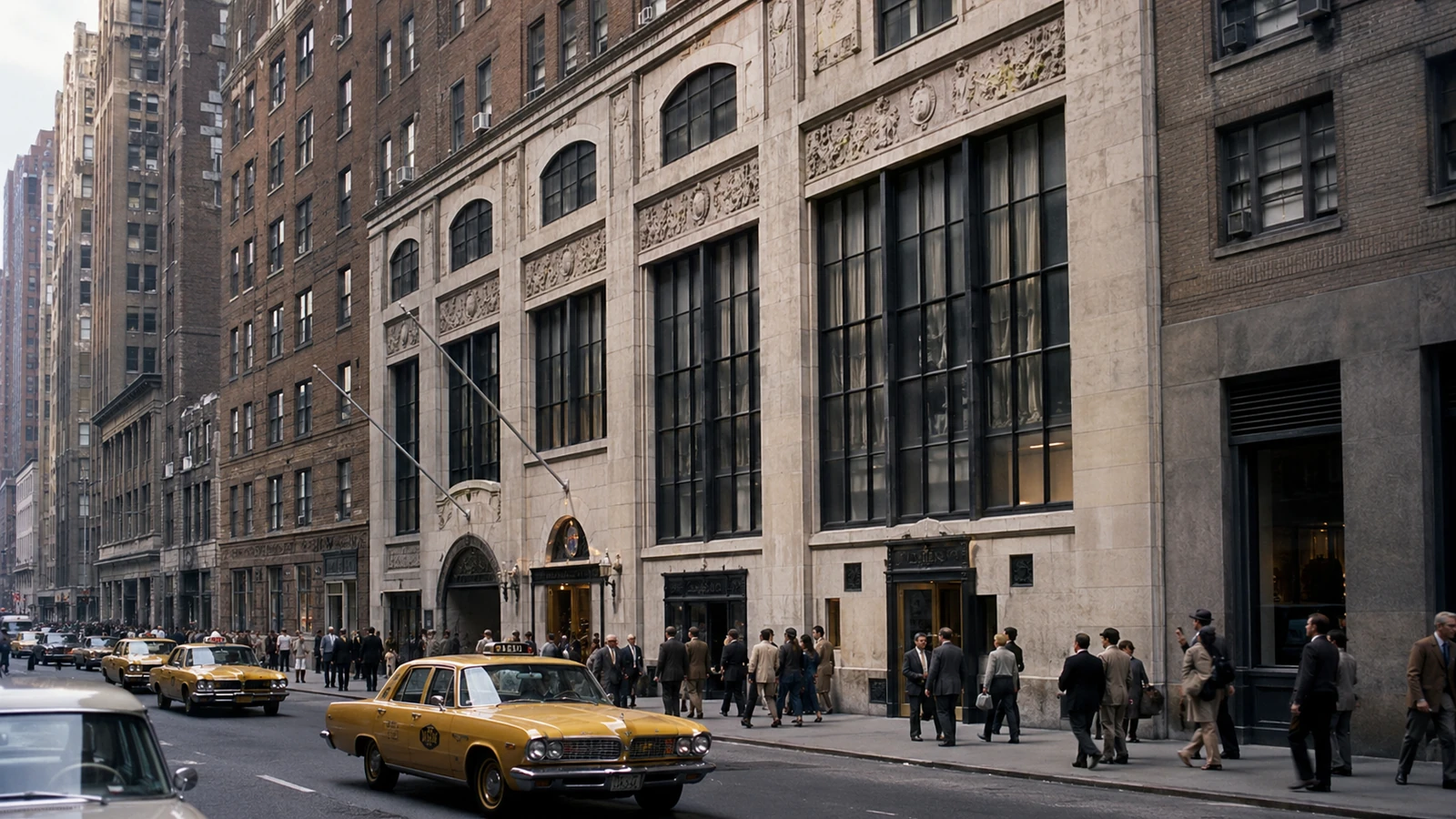
The long interval between 1961 and 1984 also meant that generations of students experienced the legacy schools primarily through their historic campuses. For Performing Arts students, the West 46th Street building remained central to school identity even after the institutions were organizationally connected.
1984: The Shared LaGuardia Facility
The decisive physical transition arrived in 1984. LaGuardia's official history records that Music & Art and Performing Arts began the school year together in their new facility at Lincoln Center. That moment marked the opening era of Fiorello H. LaGuardia High School of Music & Art and Performing Arts.
The current school operates at 100 Amsterdam Avenue in Manhattan. New York City Public Schools continues to list LaGuardia there as a specialized high school whose students combine pre-professional arts training with college-preparatory academics.
What Each Legacy School Contributed
The combined institution inherited more than programs. It inherited two narratives about what public arts education could accomplish. Music & Art brought a tradition centered on music and visual art. Performing Arts brought an identity rooted in dance, drama, and music performance. Together they helped establish an unusually broad public-school arts environment.
The official school history explicitly describes present-day LaGuardia as a tribute to its two legacy schools. That wording matters. It acknowledges that understanding LaGuardia requires remembering both institutional histories rather than treating 1984 as a complete break from the past.
Continuity Rather Than Disappearance
From the perspective of the old School of Performing Arts, 1984 can look like an ending because students no longer attended the West 46th Street campus under the same independent school identity. Yet it is equally useful to understand the year as a transfer of traditions into a new institution.
The focus on disciplined artistic training did not vanish. It continued within a broader school whose structure combined multiple arts conservatories and academic study. This is why the history of Performing Arts remains relevant to LaGuardia's identity today.
The Merger's Place in New York Arts Education
The transition illustrates how New York City attempted to preserve specialized arts education while reorganizing it for a new era. A school system that had developed separate institutions for different artistic disciplines ultimately brought those traditions under one roof.
The result was not simply a larger school. It created a highly visible model in which young people could pursue intensive artistic training across multiple disciplines within public education. LaGuardia's continuing role as New York City's audition specialized high school demonstrates the durability of that model.