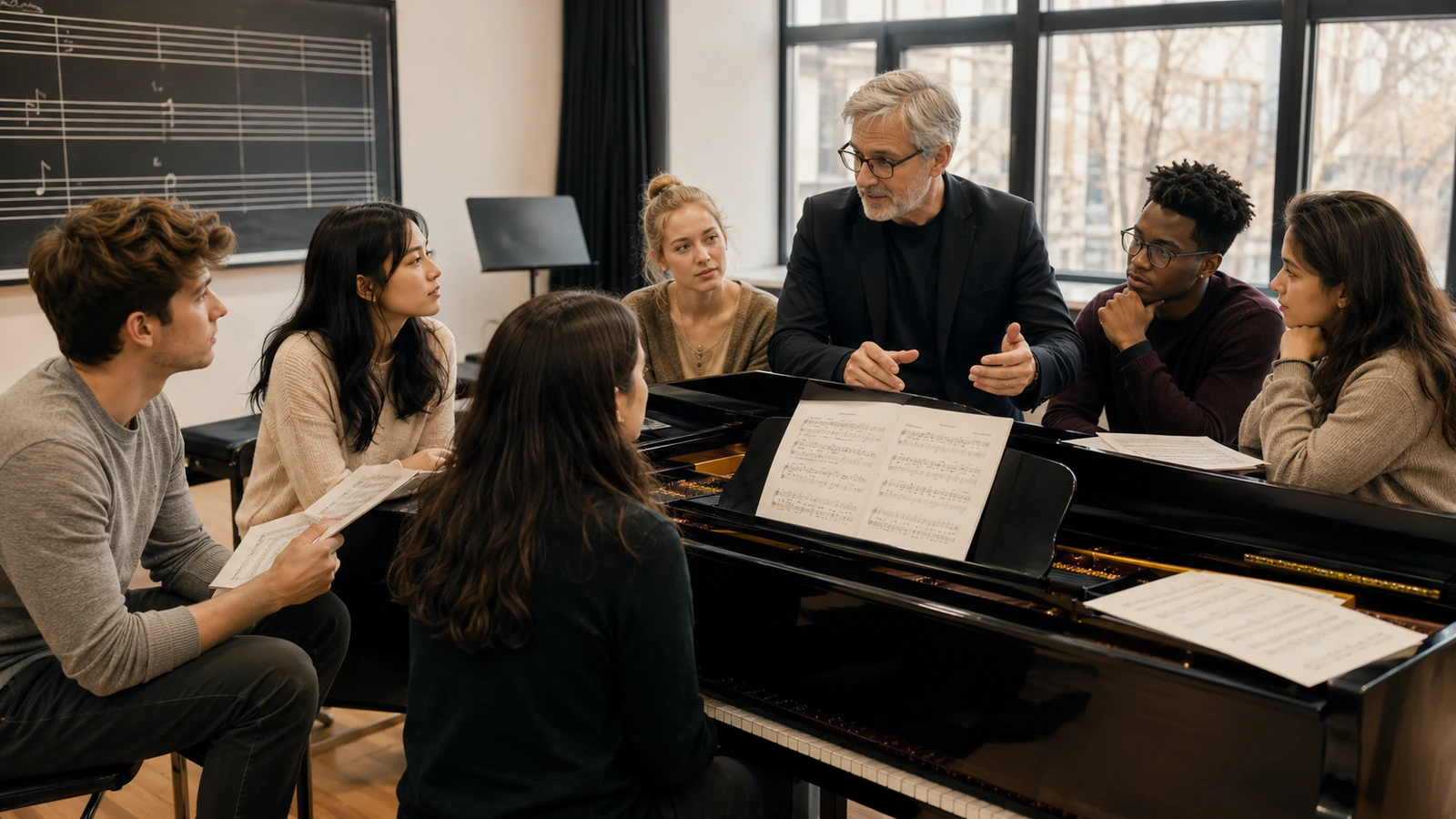
 Education
Music Education in Performing Arts
Theory, history, sight singing, ear training, and the foundations behind musical fluency.

Music • Education • Performance
From individual practice to ensemble performance, music education develops technique, listening, discipline, historical understanding, and the ability to communicate through sound.
Foundations
Music training is strongest when technique and understanding develop together. A musician learns not only how to produce sound, but how to hear relationships, read notation, interpret style, rehearse with others, and make expressive choices under performance conditions.
Legacy & Continuity
The legacy School of Performing Arts offered professional preparation in music from its establishment in 1948. Today's LaGuardia Music Studio is broader and more formalized, with separate instrumental and vocal pathways, but it continues the idea that music education combines technical training with academic musicianship.
The current Music Studio describes a conservatory model in which foundation courses and curricular ensembles are required, while all music students receive training in sight singing, theory, and music history. That structure makes clear that musicianship is not simply the ability to play or sing a piece; it also requires understanding how music is organized, heard, interpreted, rehearsed, and communicated.
Conservatory-style study works by making basic skills dependable. Scales, sight reading, rhythm, diction, breath, bowing, fingering, articulation, and score reading may look repetitive from the outside, but they create the fluency that allows expressive decisions to happen without technical uncertainty dominating the performance.
Explore More
EducationTheory, history, sight singing, ear training, and the foundations behind musical fluency.
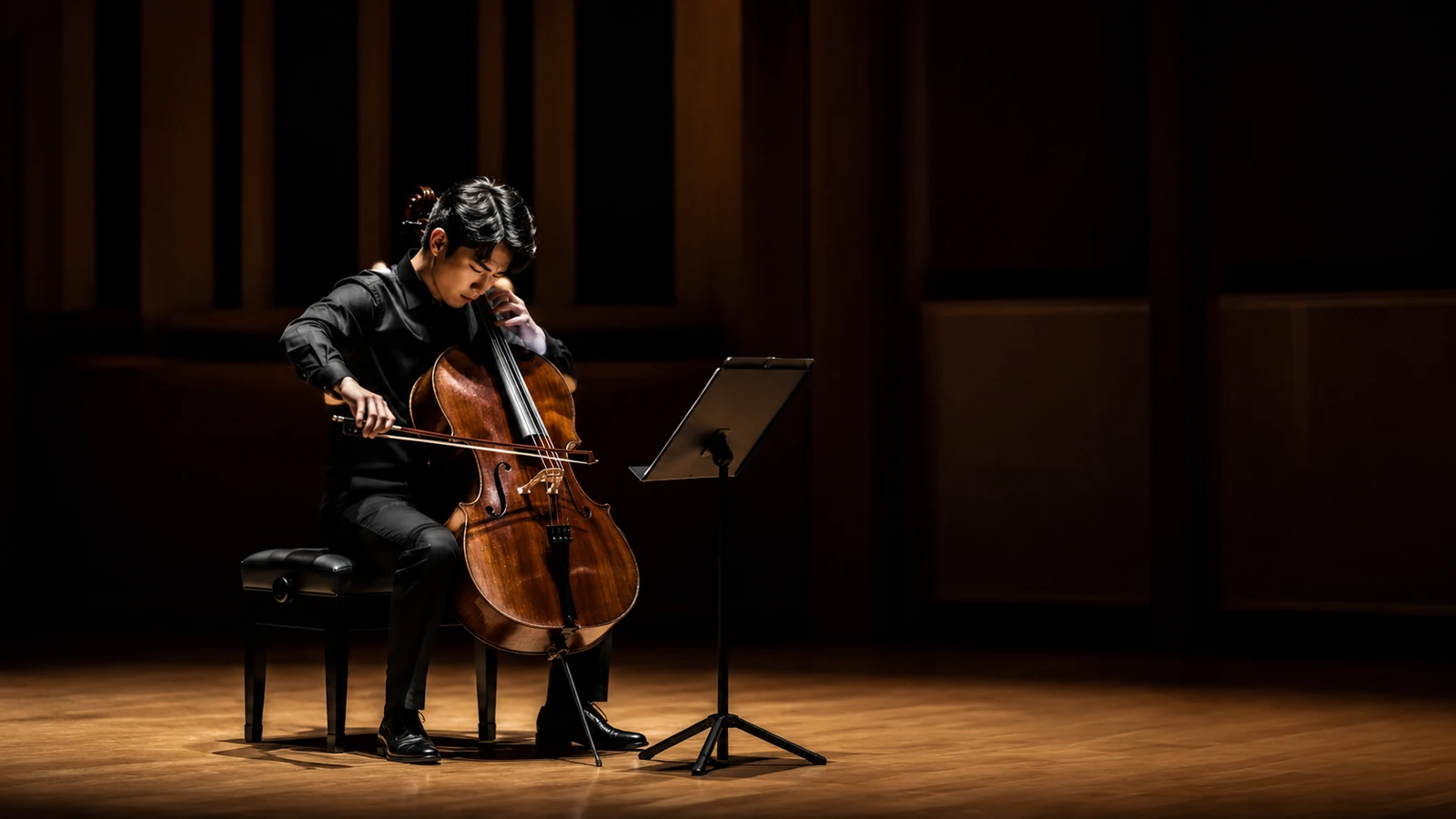 Performance
Private practice, technique, rehearsal, feedback, and the transition from preparation to performance.
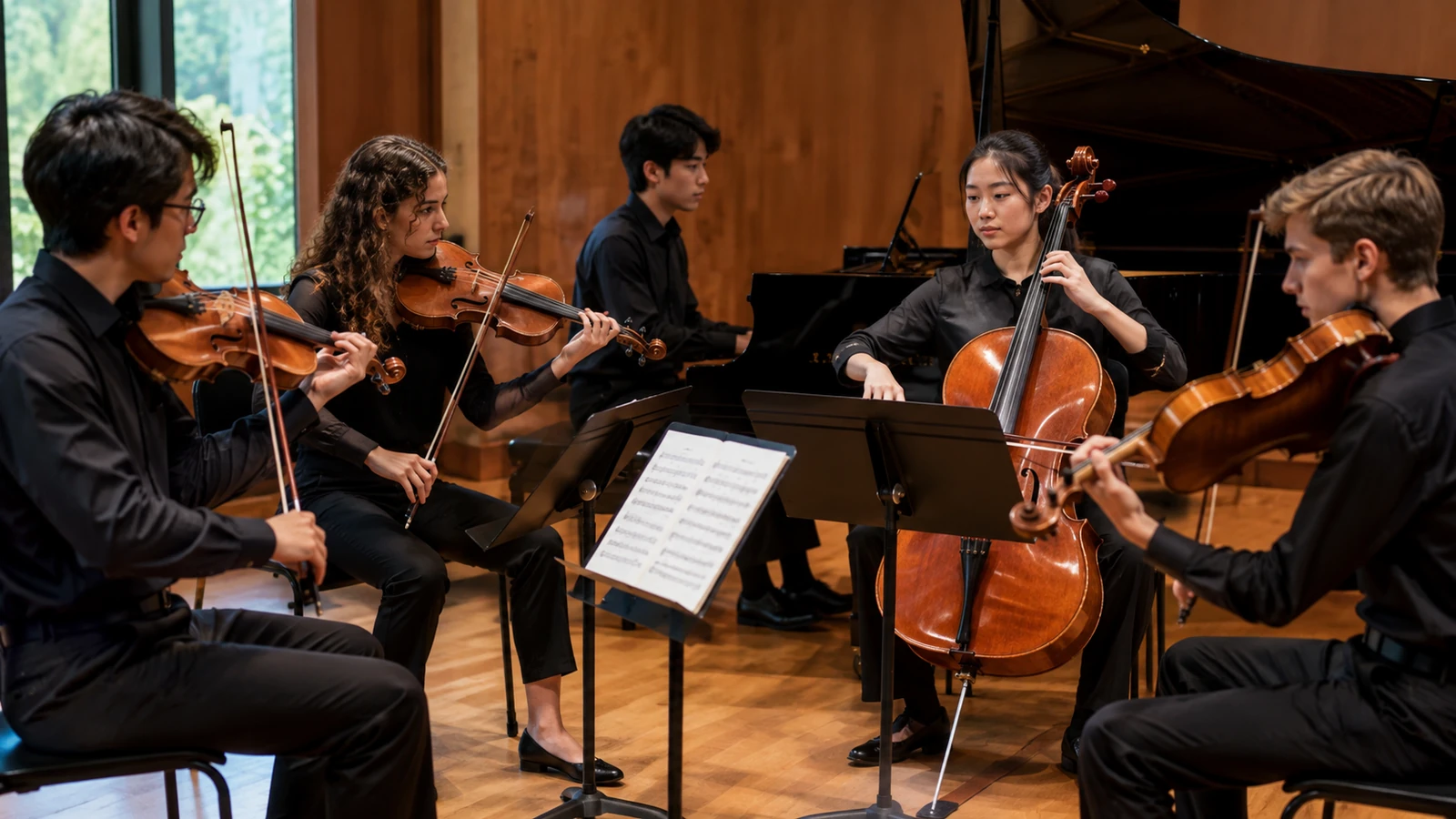 Ensemble
Listening, rhythm, balance, phrasing, collaboration, and the shared responsibility of group performance.
HighSchoolofPerformingArts.com is an independent historical and educational publication. It is not an official website of, affiliated with, endorsed by, or operated by Fiorello H. LaGuardia High School of Music & Art and Performing Arts or New York City Public Schools.